Technology has reshaped the dental profession since it began hundreds of years ago. Today, robotics and virtual dentistry are leading practitioners into a 21st century characterized by higher quality and stronger finances. Are you ready for even more changes to sweep the industry in decades to come?
Technology’s been on the march in dentistry for several hundred years. But over the last eighty, it began sprinting. Since the turn of the 20th century, the invention of lidocaine, dental x-rays and electric drills made dental diagnoses and treatments easier for practitioners and more effective, safe and comfortable for patients. In the last several decades, digital radiography rendered film-based x-rays obsolete, while the deployment of digital office technologies and the internet rewrote the playbook on how to start and manage a modern dental practice.
Despite revolutionizing dentistry, technology’s work isn’t over. Advances in robotics and teledentistry are poised to make dental surgery more precise and care more accessible. And those are just two of the ways dental technology is pushing the envelope. How far it will go is anyone’s guess. But the dental profession in 2050 will likely bear little resemblance to what it looks like today.
A full discussion of the impact of technology on dentistry’s future is beyond the scope of this article. For now, let’s discuss two specific technologies: robotics and teledentistry.
The Future of Dental Robotics
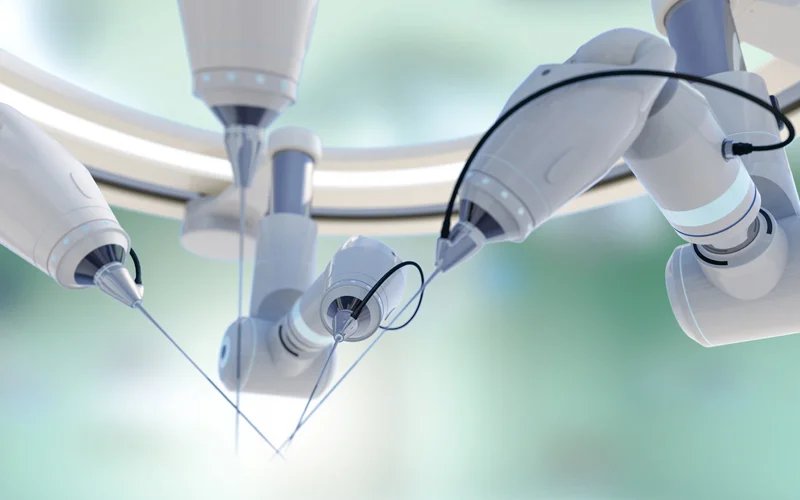
Robots have played an important role in medicine for several decades. The da Vinci surgical system, introduced in the early 2000s, along with advanced artificial intelligence, has set the stage for the advent of dental robotics. As with traditional medical robots, dental robots allow for greater surgical precision than is possible with freehand techniques. Starting as tools for better navigation, dental robots have evolved into more complex systems that will likely prove essential to treating a variety of dental conditions and to maintaining oral health.
One promising robotic application is implant surgery. Neocis, a Miami startup, launched its Yomi Robotic Dental System in 2018. At the time, it was the only U.S. Food and Drug Administration (FDA) approved robot for dental implant surgery.
Yomi continues to make converts in the dental operatory. Since it lets practitioners map out their procedures on a digital image of the patient’s jaw and teeth, dentists can easily finalize their surgical approach to avoid nerves, other teeth or sinuses. During a procedure, Yomi’s robot arm guides the surgeon’s hands, making sure they do not go stray outside the “lines” of the planned procedure. Although it doesn’t physically perform the placement of implants, Yomi prevents practitioners from violating the plan they devised at the outset. “It’s very much like a lane-assist for a car,” said Alon Mozes, CEO and co-founder of Neocis, in a Modern Healthcare article. “It’s going to keep you exactly where you want to be.”
Dr. Jonathan Ross, of Ohio-based Ross Periodontics and Dental Implants was his state’s first mover in deploying the Yoni system. Ross rejected other technology tools in planning his dental implant procedures, preferring to operate freehand. Navigation systems, guided surgery and other approaches had downsides he wished to avoid. That was before Yomi entered the scene, transforming Dr. Ross into a robot believer.
Another Yomi pioneer—Dr. Ryaz Ansari in Connecticut—used to take dental impressions, then send them to his lab to create a surgical guide. This took time. Now, with Yomi, he can create a digital 3D image of the surgical site, then plan and execute the procedure on the same day.
Accuracy, precision and time are the main advantages of using a dental robot for tooth implantation. “When drilling a hole into a jaw to place and implant, surgeons strive to prevent injury to the nerves, sinus or other teeth,” Ansari told Connecticut Magazine. “Freehand, even after 30 or 40 years of experience, you can still be slightly off.”
Using robots for implant procedures is just one example of how robots will revolutionize dentistry. Here are some additional applications being developed, tested or used today, according to a paper in the Sensors journal.
- Treatment of malignant lesions of the oropharynx. These often resist surgical treatments due to their location, leaving patients only with the options of radiotherapy and/or chemotherapy. Using surgical robots, oral surgeons have new treatments at their disposal, especially regarding oropharyngeal carcinomas and low-risk oral squamous cell carcinomas.
- Prosthetic and restorative dentistry. Robots may play a role in manufacturing partial or full dentures. The experience and knowledge of dental technicians and dentists can be programmed into an expert model, which then guides robots in fabricating the dentures.
- Tooth preparation. Preparing a tooth for crown and bridge restoration is routine but challenging work. Dental robots in the future will help decrease tooth size to make room for a dental appliance while preventing harm to adjacent teeth and gums. One device studied met clinical requirements, with an error of approximately 0.0879 +/- 0.026mm.
- Orthodontic robots. Orthodontics is a challenging technique for treating malocclusions. Based largely on manual operation and visual examinations, it depends on accurate bending of orthodontic arch-wires (OAWs). The problem is OAWs are hyper-elastic and depend on imprecise manual operation. A robotic system has been developed to bring greater control to the OAW bending process. It’s likely that more and better robots will be introduced in the coming years, making orthodontic treatments more controllable and profitable for pioneering orthodontists.
Finally, expect big advances in nanodentistry. Relying on nanobots that work at the atomic, cellular and molecular levels, dentists will be able to undertake procedures that heretofore had been impossible to perform by hand. One example: delivery of anesthesia within the gum. Nanobots can also be used to prepare tooth cavities, restore teeth and also perform dentition renaturalization. But nanodentistry won’t stop there. It can also improve dental materials since nanosolutions can improve the homogeneity of bonding agents, while nanofillers can enhance hydrophilic properties when making impressions. Another promising development is the use of endodontic microrobots to automate probing, drilling, cleaning and filing so that clinicians can provide their patients with error-free therapy.
Ultimately, the future impact of dental robots will depend on whether consumers accept them. A 2018 Embry-Riddle Aeronautical University study found that patients were more likely to accept robots performing less invasive procedures such as dental cleaning or whitening than they were to accept more invasive ones such as tooth extractions, root canals, gum surgery or cavity filling. “People feel that robots are not sophisticated enough yet to do the more invasive procedures,” said Stephen Rice, PhD, associate professor of human factors at the university. “In their minds, robots are very simple right now, so they should stick to simple procedures.”
However, reducing the price for robotic therapies had a dramatic impact on consumer willingness to accept them. For example, 32 percent of the patients surveyed were opposed to having a robot clean or whiten their teeth. But when they were offered a 50% discount, 83% said they’d be willing to give the robot a chance.
Assuming the industry can boost consumer acceptance, the likelihood that dental robots will have a large impact on the future practice of dentistry is strong. Because robots improve the efficiency, durability and quality of dental care—thereby increasing a practitioner’s credibility—it likely will have a beneficial impact on the industry’s future success.
The Future of Teledentistry
Teledentistry is another technology bringing change to the profession. Also known as virtual dentistry, it relies on dental providers using phone, text or video conferencing to conduct online consultations. It allows them to examine their patients and to provide diagnoses without people having to make an office appointment. Teledentistry is especially useful for emergencies since patients don’t have to travel to see their dentist, and dentists don’t need a vacant operatory in order to assess their patients.
Many studies have shown that teledentistry vastly increases consumer access to dental care. As long as they have the required hardware such as a smartphone or laptop, patients can interact with their dentist in real-time to provide information about their dental problem and to receive a diagnosis and treatment plan in relatively short order.
There’s much to like about teledentistry, from both the practitioner’s and patient’s perspective. According to the American Teledentistry Association, virtual dental care has facilitated:
- Better dental hygiene. The technology has helped to offset the decline in office visits that began in 2003. By giving patients virtual access to their dentists, they can get advice on emerging problems and then schedule in-office treatment as needed.
- More affordable care. Teledentistry has reduced the cost of care and created efficiencies for both patients and dental providers.
- Communication that aligns with current patient wishes. According to recent studies, some 70 percent of dental patients are comfortable communicating with their dental providers via text, email or video. What’s more, they think getting timely access to care is more important than being seen in the office.
- Less time away from work. Having to request time off from work is a major downside of the traditional dental visit. A virtual session may consume only 20 to 30 minutes compared with three to four hours or longer with a normal office visit.
- The same care quality whether delivered in the office or virtually. At the end of the day, patients value receiving quality dental care over anything else. Studies have shown that virtual dental visits produce comparable outcomes to traditional office visits.
Because of the above benefits, teledentistry has made dramatic strides forward in the last few years. An ADA Health Policy Institute tracking survey found that roughly 25% of dentists were using virtual technology to conduct remote assessments in the spring of 2020. Although the need to serve patients during the pandemic drove higher virtual usage, it’s likely that teledentistry will remain popular in the years ahead, becoming a major service offering for most dentists.
A side benefit of teledentistry is that practitioners will be able to expand care to vulnerable populations, especially elderly, disabled and chronically ill patients.
Research confirms teledentistry’s positive growth prospects. According to a 2020 study from the DentaQuest Partnership, 75% of dental providers expect their profession to rely on teledentistry in the coming years increasingly. In addition, 62% of dentists who use it said they were somewhat or very satisfied with teledentistry, while 11% of practitioners who currently aren’t using it plan to do so in the future.
However, not everything will be sweetness and light. Significant barriers remain for expanded adoption. For one thing, poor IT literacy can affect providers’ and patients’ ability to use the technology. For another, lack of internet access and or home computers in rural locations can also hinder adoption. Finally, significant accountability, licensing, jurisdictional, privacy and liability issues continue to plague dentists who want to leverage teledentistry’s potential. And since the regulation of the dental profession occurs across more than 50 state and territorial jurisdictions, ironing out these issues won’t happen overnight.
Because of ongoing liability concerns, dentists who use dental robots or teledentistry should evaluate their professional malpractice insurance to make sure it provides sufficient coverage for the latest treatment practices. If you’re not sure whether you’re fully protected, read your policy document and/or contact your agent or broker to secure the guidance you need.



Share this page.