
The coronavirus pandemic is having an unprecedented impact on American society, both socially and economically. Almost every industry is struggling to adjust, and the real estate market is no exception. As state and local governments issue shelter-in-place orders to prevent the spread of the deadly virus realtors are looking for ways to quickly adapt and stay relevant. For an industry that relies on face-to-face interactions to drive sales, real estate is particularly vulnerable during this time. For states with stay-at-home orders in place, open houses and in-person property showings are effectively banned, and some apartment buildings aren’t allowing visitors or move-ins. In places where real estate agents are designated non-essential, some firms are furloughing or laying off their employees. Sales are expected to drop in the second quarter as potential buyers are prevented from seeing properties in person.
As of early April, 44 states have implemented shelter-in-place orders, as the number of confirmed COVID-19 cases worldwide has climbed to over one million. Since the crisis began, the most immediate impact that it’s had on real estate activity is open house showings being halted, shifting to virtual tours or being relegated to appointment only. Long term, the market will see lower buyer and seller sentiment, disruptions to the sales pipeline and declines in affordability due to widespread income loss affecting buyers.
Historically, demand for homes peaks in March and April and these two months serve as the top two months for online search activity related to home buying. This time of year is also the most competitive in the housing market, with peak sales being reached in late June or early July. The second quarter of the calendar year typically represents about 28% of home sales.
As a result of the widespread uncertainty, many real estate agents are wondering what comes next, and what they can do to help their careers ride out the crisis in the meantime.
Concerns As the Market Tightens
The end of March has seen a large spike in unemployment, a record for the United States. While businesses face societal and economic turmoil never seen before, many companies are furloughing or laying off employees to cut costs. Companies like Redfin, who recently furloughed 41% of its employees, are anticipating the housing market’s inevitable downturn. Real estate agents are already accustomed to the ups and downs of the market, but the blow to the economy and the measures that companies have had to take to stay afloat have left many feeling uneasy.
What to Expect
Because of how unprecedented the coronavirus pandemic is, there are many unknowns regarding the eventual recovery. Many are eagerly awaiting the end of stay-at-home orders to see how and when the economy and the real estate market will recover. A quick recovery depends on the impact of the pandemic on the country—factoring in job losses and business closures. The real estate industry is hopeful that after months of lockdown, pent-up demand will result in a faster season during the fall and winter, which tend to be slower months under typical circumstances. With buyers cooped up indoors for the time being, there’s hope in the industry that buyer demand will surge once they’re able to leave their homes. The benefit of working in the real estate industry is that demand for basic shelter can be deferred only for so long—it’s a societal need that will always require filling.
Outlook Scenarios
Experts have predicted a few outlook scenarios on how the real estate market will respond post-COVID-19. The first is a V-shaped scenario, in which home sales steeply drop in the second quarter, then rapidly rise through the summer and fall and into 2021. Another possible scenario is U-shaped, with steady declines in the second quarter and a slow rise through the remainder of the year. Although both scenarios display a positive outlook, neither account for further economic impact or slowdown.

The long-term implications for the U.S. real estate market are difficult to predict because the industry has never been impacted by a pandemic in modern times. For historical context, sales could drop as low as they did during the 2008 recession. The recovery from that economic downturn was slow, with sales not fully stabilizing again until May of 2015. However, the factors now are quite different than in 2008, and faster recovery is more likely.
Many companies are shifting their focus on how to do business virtually, and the measurable results of those efforts are also still to come. But real estate agents can take comfort in the fact that their work is important in periods of both economic growth and decline, as some people are now unwillingly leaving their homes due to financial hardships. Real estate agents are in a better position than ever to soften the personal blows with their professionalism and compassion.
What Real Estate Agents Can Do Right Now
1. Protect Your Business & Yourself
Perhaps the best way an agent can protect themselves in times of economic uncertainty is to ensure they are protected with an errors and omissions (E&O) insurance policy. This is a type of professional liability insurance that protects agents and their companies against claims of inadequate work or negligent actions. In the case of real estate agents, E&O insurance essentially protects them from unreasonable clients who can bring lawsuits to agents for overlooking details about a property.
The legal risks in the current social and economic climate for real estate agents are higher than ever. For example, if a consumer recently bought a house and then lost their job to COVID-19, they may sue their agent for anything they can think of. As real estate agents move to work from home and showing properties virtually, it can be easy to overlook physical or structural flaws in a property that may result in a litigious client filing a suit. Real estate agents are also at risk of describing a property incorrectly or failing to serve their clients’ best interests as they are hampered by restrictions that don’t allow them to meet in person and force them to show properties virtually. With tensions running high in both personal and professional relationships and the potential for clients to consider legal recourse, it’s more important than ever that an agent has an effective E&O insurance policy, and that they keep their policy current, re-enrolling when necessary.
While E&O insurance is a requirement for real estate agents in some states, this type of insurance is beneficial to every agent regardless of where they conduct business, because it protects agents from lawsuits across the board. If agents don’t want to expose themselves to the risks posed by a hazardous COVID-19 market, they should obtain an E&O policy. Not only do these policies shield real estate agents from financial risks, but they also communicate to prospective and current clients that they take their jobs seriously and conduct themselves professionally.
Personal protection is of the utmost importance if coming into contact with consumers is necessary—it’s recommended that before touring a home, each person removes their shoes and sanitizes or washes their hands. With the CDC’s recent recommendation on wearing masks outside of your home, it would favor real estate agents to wear a mask as well. If an agent must meet with someone face to face, take the proper precautions—don’t shake hands, sanitize common areas keep six-foot distance, and wear a mask if needed. If an agent finds themselves furloughed or otherwise out of work, it’s good practice to keep up with real estate continuing education credits, to help them get back on track when the pandemic is over.
2. Enhance Your Business
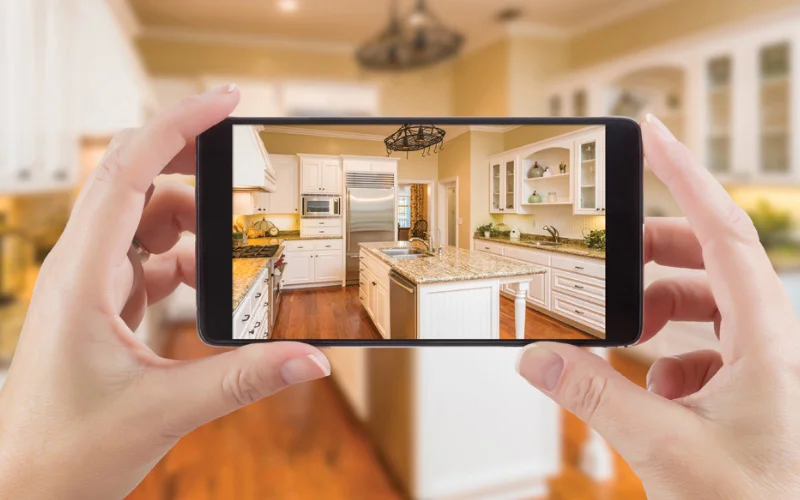
Real estate agents should also take advantage of the technology available to them to do their jobs. More people are turning to remote touring options when it comes to looking at properties—a fact supported by the number of 3D home tours on Zillow rising by 326 percent on March 20. The benefit of showing properties virtually will come in handy when the worst of the crisis passes, as some industry experts expect a natural shift to virtual home touring even after the pandemic has come and gone. With better technology available now more than ever before, agents will certainly benefit from becoming familiar with these virtual tools.
It’s also a great time to work on your new client acquisition plan for when the market rebounds. Get ready to attract new clients by enhancing or creating new social media, website and personal networking tactics.
Continuing education credits would also greatly benefit real estate agents, as they find themselves with more downtime or temporarily out of work. Each state has its own continuing education hour requirements for real estate agents to complete each year, but keeping up to date on these requirements will ensure that agents are easily able to get back into the field once restrictions start to lift.
Looking Ahead
As previously mentioned, the real estate market isn’t going anywhere—when the coronavirus pandemic ends, businesses will still need space and people will still need homes. The industry, however, may find itself irrevocably changed due to the impacts that the virus has had on social norms. More people may participate in virtual home tours and conduct more of their business online. This could be good news for real estate companies that have jumped at the opportunity to move their businesses to the virtual world. They’ll be better prepared to handle a natural shift to online real estate work. It’s important to remember that no matter what technology-driven changes are in store for the industry, real estate will always be a people business. Today it’s hard to imagine a real estate transaction completed entirely without face-to-face interaction.
The current economic slowdown occurred suddenly, with few warnings that the economy was about to sink into a rut. For now, there are a few indicators that will point to how quickly the market will recover. The first is the flattening of the curve of infections and the end of stay-at-home orders. These are reliable prerequisites to the return of economic normalcy. When jobless claims start to fall and data from the hardest-hit business sectors (including the restaurant industry, airlines, hotels and the oil industry) begins to trend upwards, it’s safe to say the machine of the real estate market will begin to power back on as well.
Within the industry, there tends to be optimism that a quick recovery for real estate is on the horizon, although it may be slow going at first. While the extreme and sudden shift in economic activity seems alarming, the future may not be as bleak as some may expect. If stay-at-home orders are lifted by the summer, the market may be flooded with prospective buyers who have been isolated inside their homes and unable to do business. These predictions point to a strong comeback for real estate, and business in the meantime is not completely off the table—sellers who cannot wait will still list their homes and show them virtually.
For now, real estate agents should focus on protecting themselves, both personally and professionally as they navigate this period of uncertainty. Taking the proper precautions against the virus when interacting with clients, staying on top of their continuing education and ensuring they have an effective E&O insurance policy are all crucial steps for agents to take in the coming months. This will ensure that when the market recovers, agents are more ready to serve their eager clients who are anxious to make personal and professional changes in the wake of this historical global event.

Share this page.