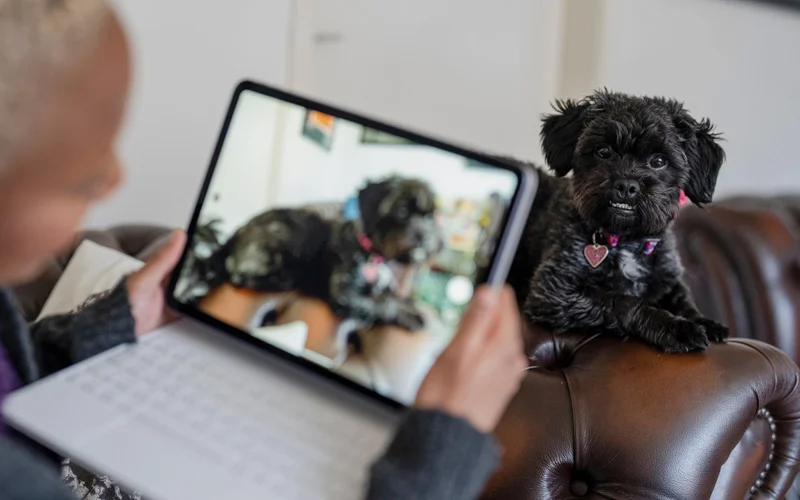
Telemedicine has revolutionized the healthcare industry by streamlining professional workflows and providing better and more cost-effective access to care. Now veterinary telemedicine can do the same for pets.
Veterinary telemedicine allows pet owners to remotely access care for their pets for essential examinations, diagnoses, and treatment planning. During unsuitable for emergencies or more thorough exams, it is an excellent way to bridge the gap where access and efficiency could be improved for your clinic and the industry. This is especially true for those needing specialists beyond regional boundaries and when individuals cannot physically bring their pet into the clinic or hospital.
In this article, we’ll cover everything you need to know about veterinary telehealth, including its benefits and limitations, so you can plan to implement virtual care for your furry patients.
Read on to learn more.
How Veterinary Telemedicine Works
Veterinary telemedicine works like human telemedicine in that pet owners will use your online portal to request a visit. In this request, they’ll provide the necessary information about their pet’s condition, and the veterinarian or veterinary assistant will schedule the digital visit via the preferred digital channel.
The AVMA defines veterinary telemedicine as the “use of medical information exchanged from one site to another via electronic communications regarding a patient’s clinical health status.” In other words, it’s like Skyping with your patients. Telemedicine services can be carried out over the phone as well. Still, it’s common for healthcare professionals across the board to utilize the appropriate software and equipment to provide more in-depth care from one screen to another.
It should also be noted that the AVMA emphasizes that veterinarians who implement virtual care into their practice only use it within the confines of existing veterinarian-client-patient relationships (VCPRs). This means conducting telehealth sessions only with patients you’ve already physically examined and whose medical history you’re already familiar with. The AVMA has also released a substantial report regarding veterinary telemedicine, which provides essential recommendations for its implementation.
Ultimately, the critical components of veterinary teleconsulting involve the following:
- Scheduling appointments and connecting with patients via computer or another capable smart device on the client’s side
- Discussing the animal’s care during the visit based on the information provided by the client
- Providing an essential diagnosis
- Providing treatment recommendations and, in some instances, prescriptions for specific diagnoses
The Benefits of Veterinary Telehealth
The primary benefit of veterinary telehealth is providing a streamlined experience for both parties. This is especially true for millennials, the most significant driver of the pet care industry’s growth.
Further benefits of veterinary telehealth include:
- Creating stronger client relationships that, in turn, boost revenue
- Using a modern technological solution that aligns with current trends and behaviors, which encourages pet parents to become more interactive with their pet’s veterinarian
- Offering busy pet owners more flexible opportunities to make and follow through with pet care appointments, which will increase your overall visitation rate and ensure your pet care practice remains as healthy as the pets you oversee
- Allowing you better to sustain your practice during local and national emergencies. Telemedicine became critical during the recent pandemic when everyone was required to practice social distancing and self-quarantining. However, connecting digitally for care will also be valuable during weather events or when clients cannot physically come to your office.
- Providing much-needed relief for your practice by helping to see more patients in less time and contributing to your overall work-life balance
The Limitations of Veterinary Teleconsulting
Naturally, veterinarian telemedicine has its drawbacks — namely; there are challenges when diagnosing an animal you cannot physically examine up close.
Other limitations may include the following:
- A bad wireless connection due to region, weather, or other circumstances, which may contribute to a lower resolution and other technical difficulties that can impede your ability to provide quality care
- Emergencies where an animal needs immediate care or a more thorough examination for a proper diagnosis — such as taking blood and stool samples.
Of course, a bad wireless connection can be fixed simply by switching smart devices if available. Additionally, veterinary teleconsulting aims to evaluate minor problems, monitor chronic conditions, and accomplish post-surgical checks. It also serves the purpose of writing and refilling prescriptions.
The benefits of incorporating telemedicine into your veterinarian practices largely outweigh any limitations. As long as it’s used appropriately, you’ll find that it makes your work as a dedicated pet care professional much easily. Information on 360 Coverage Pros veterinary malpractice insurance, review our coverage information.



Share this page.