
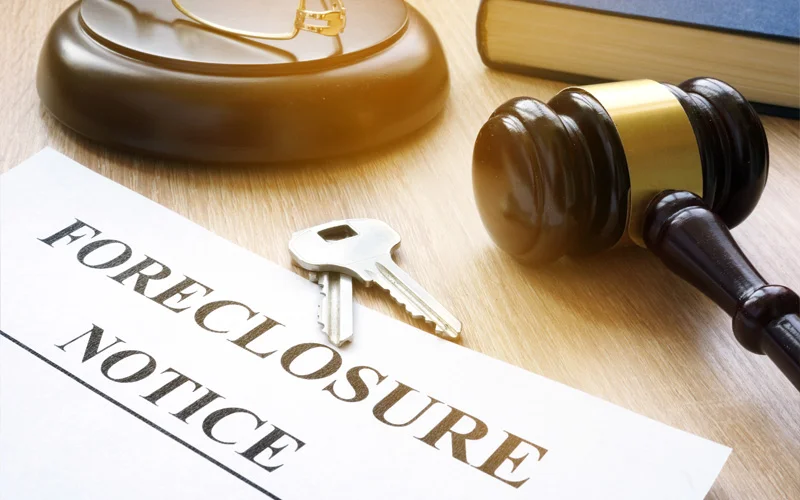
Working on real estate foreclosures is one of the riskiest legal practice areas at the moment. Here’s why and how you can protect yourself.
Mortgage foreclosures have been toxic to the U.S. economy at various points in the country’s history. This was especially true during the sub-prime mortgage crisis of 2007-2008 and the pandemic crisis of 2020. In times of economic stress, foreclosures are a necessary tool, helping mortgage lenders clear defaulted loans. But when foreclosures reach Olympian heights, fueled by flawed mortgage underwriting and noncompliant foreclosure practices, they can spark a public-policy crisis.
No one knows this better than lawyers who specialize in real estate foreclosures. During the financial crisis of 2007-2008—and the Great Recession that followed—so many consumers defaulted on their sub-prime loans that the foreclosure system froze. Banks and loan servicers resorted to any means possible to work through millions of bad loans, using the practice called robo-signing. This involved the employees of mortgage servicing companies signing foreclosure affidavits without actually reviewing the underlying facts. As a result, lawyers pushed through foreclosures without verifying that mortgage lenders owned the loans and that borrowers were actually in default. Because so many consumers lost their homes unjustly, the federal government was forced to intervene.
The robo-signing scandal led to several large settlements starting in 2012 between state attorneys general, federal banking regulators and five large banks (totaling roughly $34 billion). The ensuing reforms injected more rigor into the foreclosure process. In states where foreclosures go through the courts (about 25 of them), judges began subjecting foreclosure applications to much greater scrutiny. In non-judicial states, homeowners sued lenders and mortgage servicers to stop foreclosures on the grounds that the transactions were based on false premises.
Foreclosures Heighten Malpractice Risk
In this environment, attorneys representing either homeowners or lenders were subject to heightened malpractice risk. Making an innocent or sloppy mistake could land you in hot water. And if you deliberately gamed or defrauded the system, your legal exposure could become acute. Such was the case with Attorney Steven J. Baum, the so-called “foreclosure king of New York.” Baum, who turned his father’s sleepy Buffalo law practice into one of the largest foreclosure mills in the country, earned $50 million or more from wrongfully evicting thousands of New Yorkers from their homes. Vincent O. Hanley, Esq., an attorney with Bond Schoeneck & King, PLLC, said Baum’s firm handled over 100,000 foreclosures in the state. This represented about 40% of all New York foreclosures at the time.
In 2010, the media began writing exposés on Baum’s practices, including a damaging piece in Bloomberg BusinessWeek. Client lawsuits mounted and eventually the New York Attorney General opened investigations for mortgage processing violations, filing false documents and representing parties on both sides of a mortgage transaction. After agreeing to pay a $2 million settlement to close a Southern District of New York (SDNY) federal investigation in October of 2011, the New York Times wrote about a Halloween party in which Baum employees dressed up as foreclosed homeowners. Soon after, Freddie Mac and Fannie Mae, the giant mortgage-servicing firms, blackballed the law firm. Baum closed his doors one month later.
Even though Baum’s story occurred almost a decade ago, it remains a cautionary tale for real estate attorneys who work the foreclosure market. Here are some of the practices that got the “foreclosure king” in deep trouble:
- Routinely bringing foreclosure actions without verifying the accuracy of the claims or the lender’s right to foreclose.
- Not having documentary proof that the plaintiff owned and held the note and mortgage being foreclosed despite it being a securitized loan, which often made such an assertion questionable.
- Having foreclosure applications processed by non-attorneys with little or no attorney supervision.
- Stating his firm examined the complaints and underlying documents without actually doing so.
- Pre-signing and pre-notarizing documents to be attached to complaints.
- Signing documents without having a notary present.
- Failing to file timely Requests for Judicial Interventions and Attorney Affirmations regarding the accuracy of foreclosure summons and complaints.
- Denying borrowers the option to apply for loan modifications that might help them remain in their homes.
Rigorous foreclosure due diligence is necessary because the process is so byzantine and has so many legal checkboxes. However, it’s warranted because there must always be a high bar for evicting consumers from their homes. This is why the burden on attorneys to follow the rules is so heavy.
The key is to assure that real property ownership is neither dissolved nor created without a proper legal basis. What should this look like? According to Christopher K. Odinet, assistant professor of law at the Southern University Law Center, attorneys doing foreclosures must have the legal authority to enforce the terms of the mortgage. They must also have an accurate description of the mortgaged property and of the homeowner’s actions that triggered a default. Finally, they must make certain that all involved parties receive state and federal due process regarding foreclosure notification.
Best Practices for Risk Mitigation
Clearly, this is 36,000-foot guidance. The devil is at the ground level of governing state statutes, which are beyond the scope of this article. But here are some basic compliance strategies that should keep you out of hot water.
- The starting point is obvious: you must strictly follow state law when doing foreclosures. Since these requirements are subject to change, try to review statutes at least once a month or subscribe to a service that will update you as needed. In addition, engage in periodic continuing education from an accredited educational institution.
- If you operate in a state that doesn’t require judicial involvement, be cautious when working on foreclosure sales. Based on rulings in several states, you must be certain the prior foreclosure was executed properly. If you gloss over this step, you might leave yourself open to a malpractice claim for not giving your client clear title to the property.
- When executing a foreclosure for a lender, don’t take anything on faith. Review the file to make sure it includes the actual note. Also, be sure there’s a current payoff calculation included and that all lender documents have been properly witnessed and notarized.
- In cases where you are closing the sale of a foreclosed property to a new owner, watch for so-called “foreclosure rescue” scams. These schemes involve criminals who persuade distressed property owners to sell them their property with a promise to sell it back at a later point after the loan has been renegotiated. But after the sale closes, the scammer grabs the equity, leaving the original owner worse off than before. How to prevent such scams? Watch for giveaways such as the buyer not providing cash at closing or buying the property as a primary home even though the person already has one. Another warning sign is when original owners say they plan to keep living at the property as a renter. Failing to detect and blow the whistle on foreclosure rescue frauds can subject you to a malpractice claim from the original owner or lender.
- To protect your practice against malpractice litigation, devise and implement a system for complying with all relevant foreclosure statutes and regulations. This involves training support staff on how to properly handle such transactions, doing spot-checks to make sure they’re following the rules and providing ongoing continuing education to assure they stay current on evolving laws.
If you’re representing the entity filing for a foreclosure, make sure it has the standing to make this claim. You also want to be certain it offered the homeowner loss mitigation options, including loan modification, and didn’t wrongfully deny the person’s application for such a modification. Also, check to see that the lender correctly responded to a notice of error or request for information and did not engage in fraudulent loan origination practices such as encouraging the mortgage applicant to exaggerate income or doing a bait and switch with interest rates.
Also crucial is being attentive to client behaviors that signal potential malpractice claims ahead. These include:
- Distressed homeowners who demand impossible-to-deliver results.
- People who have run out the clock but still expect you to turn back time. For example, those who want you to stop a foreclosure sale scheduled for the next day or week.
- Those who want to fire their existing attorney and hire you instead. When you walk into a raging foreclosure fire, don’t be surprised when you get burned.
- People whose attitude or background suggests they might be litigious clients. If you would have refused to work with them on other matters in the past, you should do the same regarding their current foreclosure problem.
In short, to prevent malpractice claims, get back to compliance basics in every phrase of the foreclosure transaction. This starts with double-checking the accuracy of the plaintiff’s pleadings and making sure your client is actually the owner and holder of the mortgage and note. Then always take the following steps:
- Supervise non-lawyer staff involved in preparing foreclosure documents.
- Don’t verify pleadings or sign any documents without actually verifying their accuracy.
- Always sign notarized documents in front of a Notary Public.
- Always calendar key dates in the foreclosure process and then be diligent in meeting those dates.
By mastering the foreclosure process and executing it to a high level of proficiency, you will not only render appropriate service to your clients, but you’ll also protect your business against potentially catastrophic malpractice judgments. Don’t jeopardize your practice when robust due diligence and execution can nip damaging claims in the bud.
Paying too much for your lawyer malpractice insurance? Then consider the protection available from 360 Coverage Pros. Coverage starts for as low as $800 per year.


Share this page.